


Minimum CIBIL Score for Loan Approval in India: What Lenders Actually Check

Find out the minimum CIBIL score needed for loan approval in India, how it affects your interest rate, and how to improve it before you apply.
Understanding Your CIBIL Score
Your CIBIL score is often the single biggest factor standing between you and loan approval, yet most borrowers only think about it after an application gets rejected or comes back with a higher than expected interest rate. Understanding how the score works, and what lenders actually do with it, can save you both time and money.
A CIBIL score is a three digit number between 300 and 900, generated by TransUnion CIBIL, one of four credit information companies licensed by the Reserve Bank of India (the others being Equifax, Experian, and CRIF High Mark). It is calculated from your credit history: how many loans and credit cards you have held, how consistently you have repaid them, how much of your available credit you are using, and how long you have had credit accounts open.
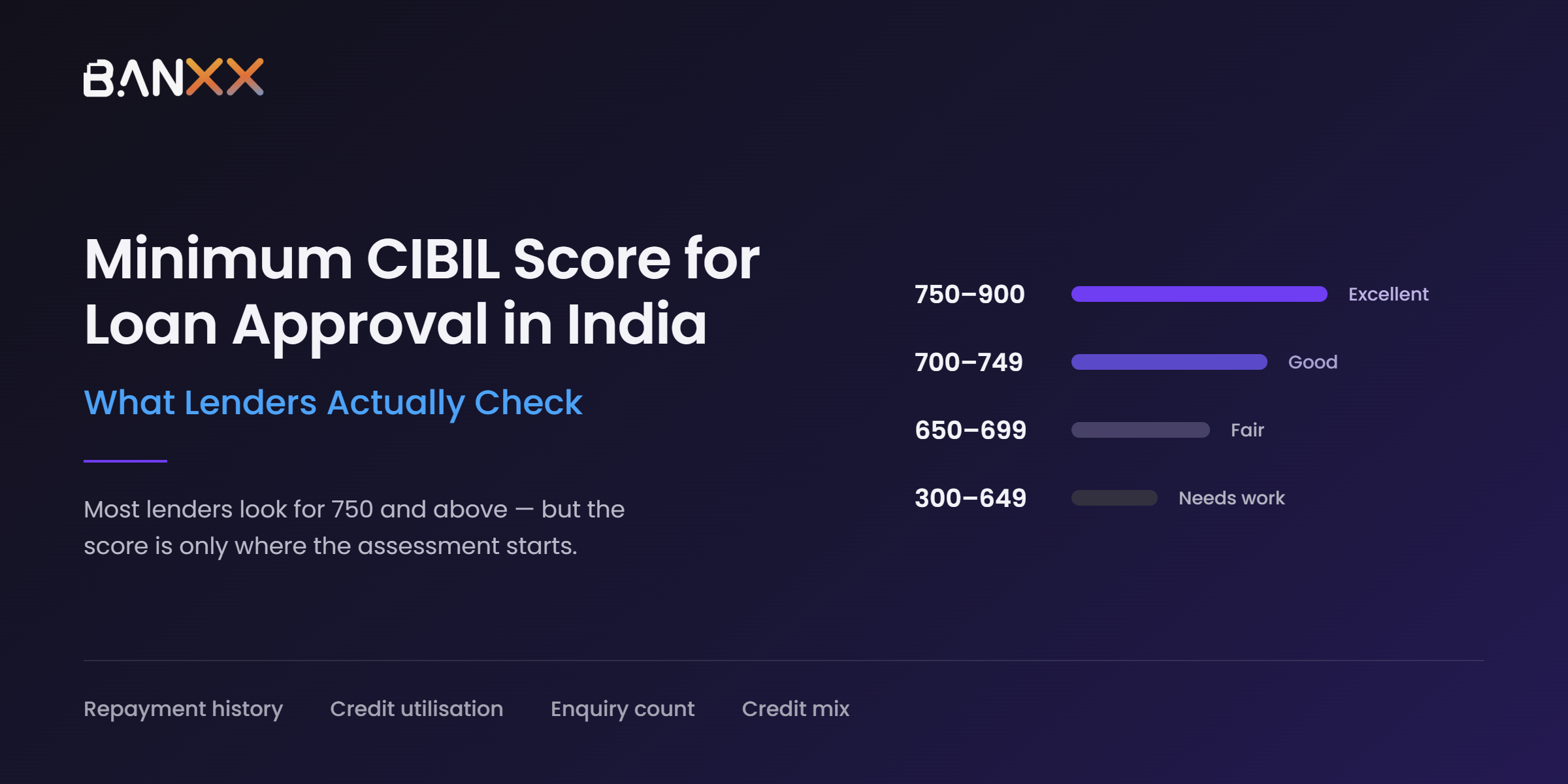
Generally, lenders group scores as follows:
These ranges are general guidance, not a fixed rule; every lender sets its own thresholds, which is one reason comparing multiple lenders side by side matters more than chasing a single magic number.
A common misconception is that CIBIL score is a pass or fail gate. In reality, it influences three separate things:
This is why two applicants with similar income can walk away with very different offers from the same lender, and why the same applicant can get meaningfully different offers across different lenders.
The CIBIL score is a summary number, but lenders typically dig into the underlying report as well:
A lower score does not have to mean no options. Secured borrowing, such as a loan against property or a gold loan, is often more accessible than unsecured credit for borrowers in the fair or middle score ranges, since the collateral reduces the lender's risk regardless of the number on your report.
Because every lender weighs these factors differently, a score that gets rejected by one NBFC or bank may still be approved by another, sometimes at a meaningfully different rate. This is where comparing offers across multiple lenders, rather than applying to just one and hoping, tends to produce the best outcome, particularly for borrowers in the fair or middle score ranges.
Before applying anywhere, it is worth checking your CIBIL report directly, since you are entitled to one free report per year from each bureau, so you know exactly where you stand and can address any inaccuracies ahead of time rather than being surprised by them mid application.
.png)
.png)